SALINA, Kan. — The Salina City Commission voted 5–0 Monday to approve a proposal for the design, purchase, and installation of a new splash pad at Jerry Ivey Memorial Park, following a detailed presentation by Parks and Recreation Director Jeff Hammond.
Background and Earlier Delays
Plans for a splash pad at the park have been under discussion since late 2024, when commissioners postponed awarding a sole bid for a natural-themed splash pad and water wall feature. That earlier proposal carried a cost of roughly $1.8 million, far exceeding the project’s budget and available funding.
Staff later worked with engineers to scale back the project, reducing the scope to focus on the splash pad and officer memorial while trimming overall costs. Even with those adjustments, commissioners rejected the sole bid in April 2025, citing continued budget concerns.
To provide context, staff compared splash pad projects across the Great Plains region, dividing them into two categories: smaller, non-themed pads with 10–12 features, and larger destination-style pads with more advanced theming. Construction costs across those projects ranged from $250 to $350 per square foot.
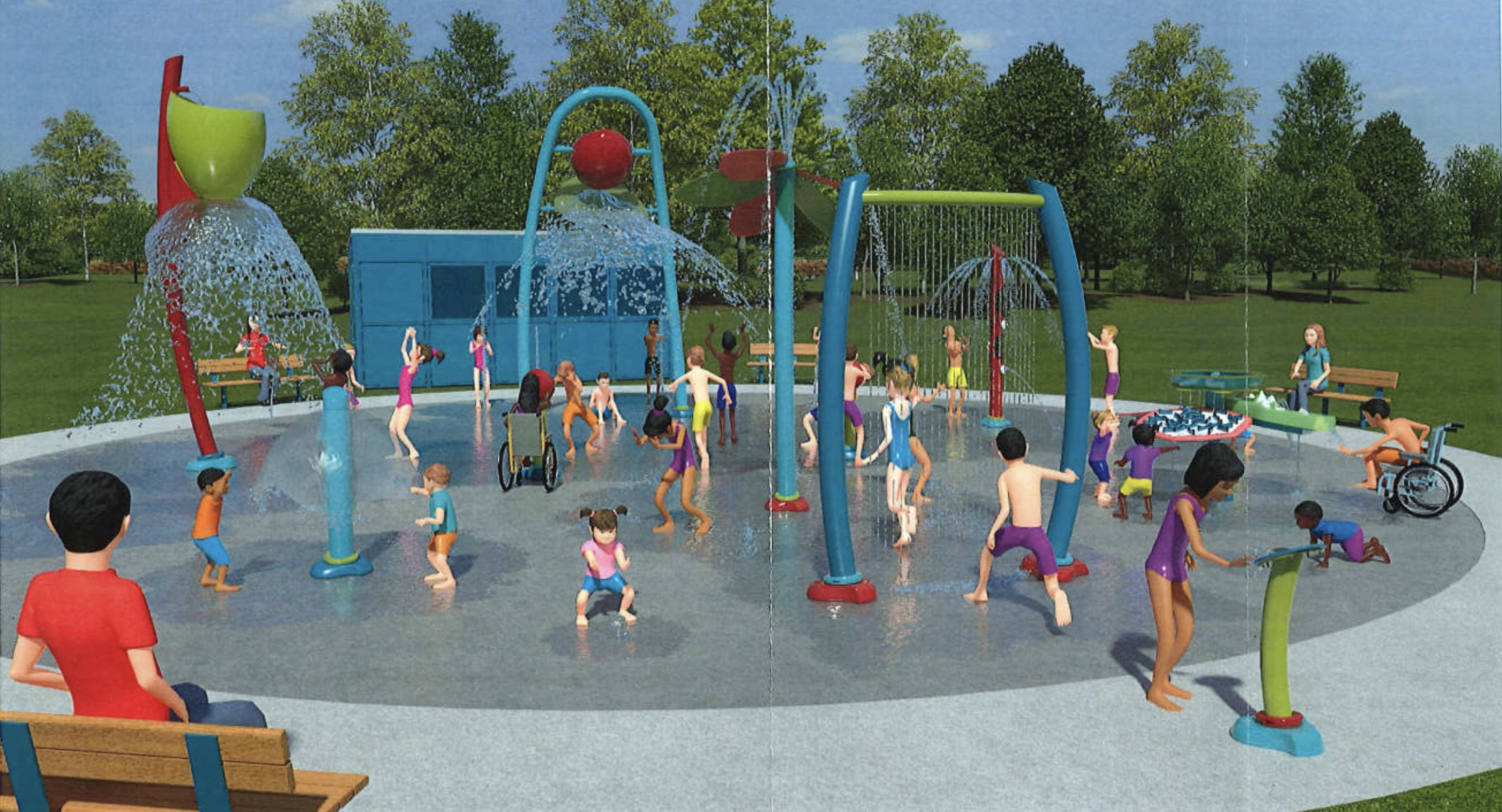
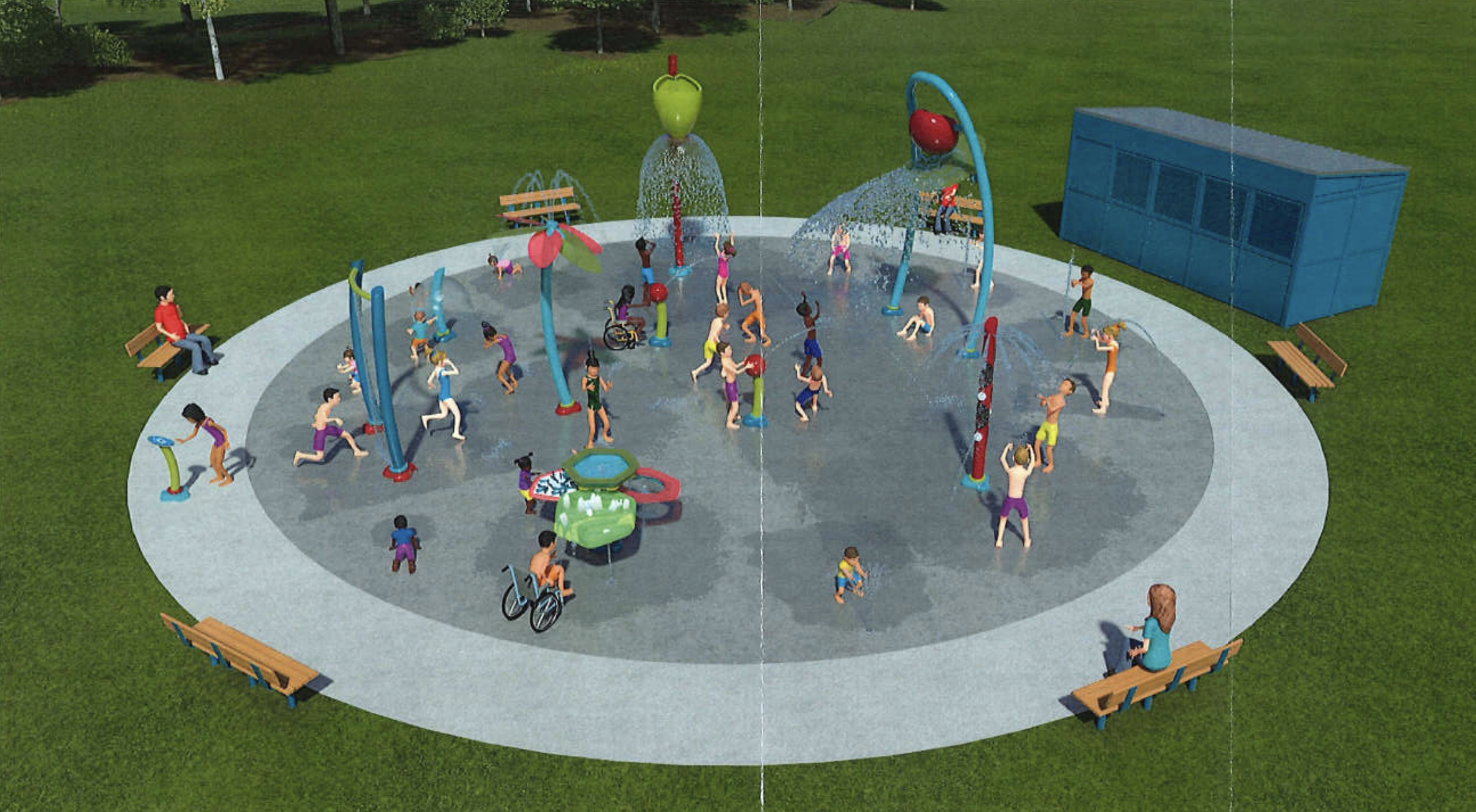
The consensus from commissioners was to move forward with a new design for a splash pad at the south end of Jerry Ivey Memorial Park, making the pad the base bid while treating items such as the water wall, gazebo upgrades, and landscaping as alternates.
Request for Proposals
Despite revised bid documents and outreach to construction firms in Kansas and Missouri, no bids were received in July. Staff then issued a Request for Proposals (RFP) on August 5, 2025, targeting splash pad manufacturers directly — similar to the city’s process for playground installations.
The RFP specified several key features, including:
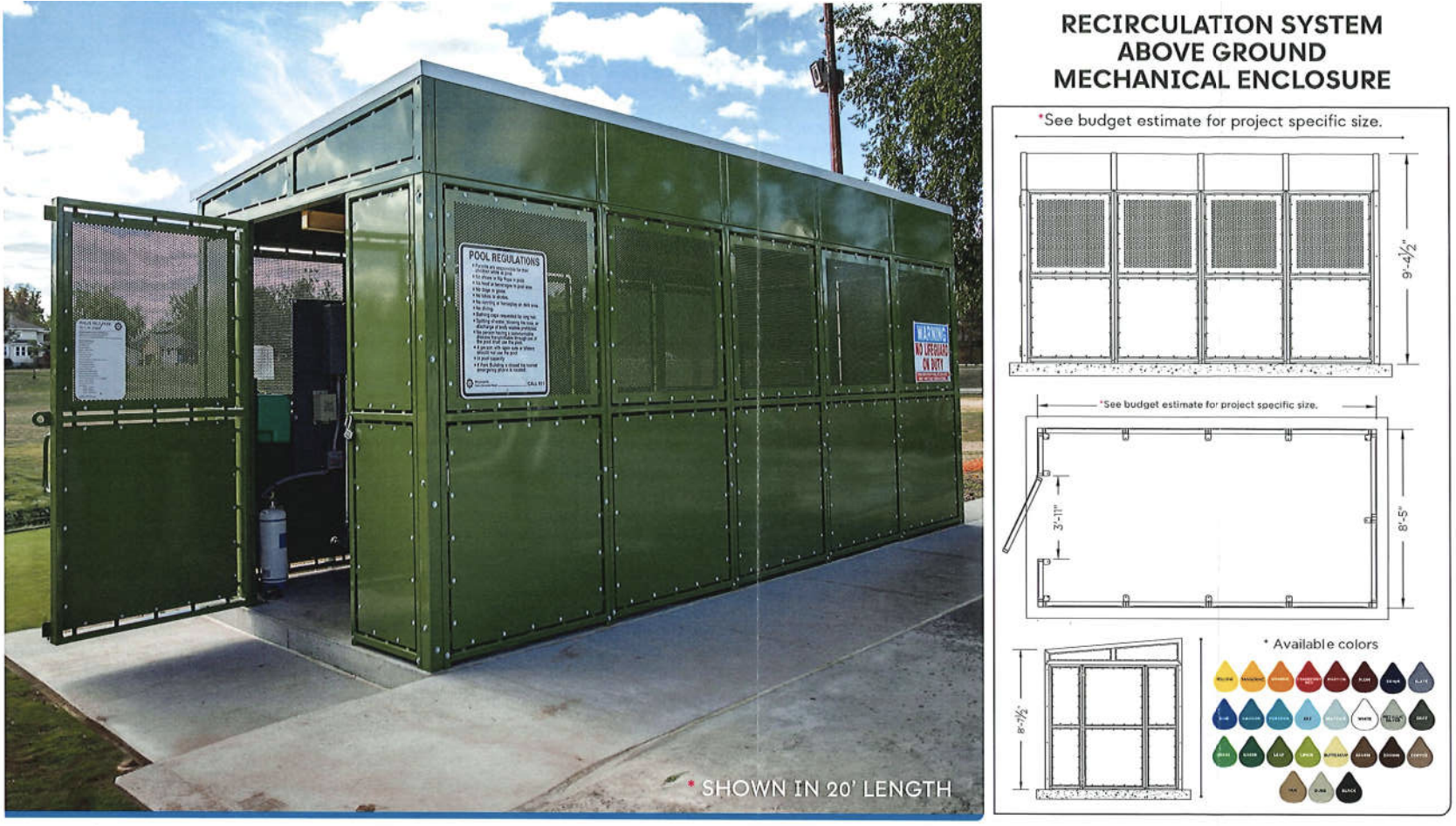
- A recirculation system with sand filtration and automated chemical controls.
- A durable, vandal-resistant design with powder-coated metal.
- Wheelchair accessibility with a non-slip surface.
- A footprint of 2,400–2,600 square feet, similar to the original splash pad.
- Between 8 and 14 splash features, both ground and elevated.
- A perimeter sidewalk, electrical grounding, and a timer system.
- A location on the north side of the park, where the original splash pad was located.
The RFP attracted 10 proposals from six firms. Staff scored the submissions based on budget alignment, experience, features, design, value, warranty, and efficiency.
Approved Bid
The highest-scoring proposal came from AFCO LLC, whose Option One included:
- A 2,800-square-foot splash pad with 17 features.
- Infrastructure such as water supply, return lines, concrete work, feature installation, and a five-foot perimeter sidewalk.
- A mechanical building designed for easy maintenance, eliminating confined-space requirements for staff during seasonal operation and winterization.
- Benches, site restoration, and staff training on operation and maintenance.
AFCO also included an option for a digital art wall at a cost of $9,100. After consultation with the Arts & Humanities Department, staff recommended excluding that feature due to the short timeline for artist selection. Hammond said future public art projects could still be considered for the site.
Project Costs and Funding
The AFCO proposal totals $640,896, with additional city responsibilities — including utility connections, geotechnical testing, and site preparation — budgeted at $34,500. A 5% contingency brings the total project request to $709,165.
Funding will come from the Park Improvement Capital Fund, which currently has a balance of about $1.5 million. The per-square-foot cost of the AFCO proposal is estimated at $253, placing it within the range presented to commissioners earlier this year.
Timeline
Hammond presented a tentative timeline with construction potentially starting as early as March 16, 2026, weather permitting. The schedule allows for product manufacturing, equipment delivery, and site preparation to align with seasonal building conditions.
“Of course, any timeline for construction projects is subject to weather,” Hammond said. “But we want to be in a position to move as quickly as possible once equipment is ready.”
Final Vote
After discussion, commissioners voted unanimously, 5–0, to approve the AFCO proposal and authorize the city manager to oversee purchases and project execution.