
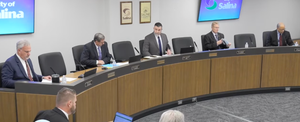
The Salina City Commission has formally adopted a Vision Zero policy, setting a long-range goal to eliminate all traffic-related deaths and serious injuries within city limits by 2035. The resolution passed 5–0 during Monday’s meeting, following a presentation from Public Works Director Ron Marsh and discussion among commissioners and residents.
Vision Zero is part of the City’s ongoing “Safe Streets for All” initiative. Marsh described the policy as “ambitious and challenging,” but achievable through coordinated planning, data-driven decision-making, and targeted infrastructure improvements.
Key Elements of Salina’s Vision Zero Commitment
Under the newly adopted resolution, the City will:
- Work toward eliminating traffic fatalities and serious injuries within ten years
- Collect and analyze crash data to guide policy and project decisions
- Create a Vision Zero Committee to develop an action plan
- Prioritize pedestrian, cyclist, transit, scooter, and disability-access safety
- Focus improvements on high-crash corridors, speed reduction, and safer roadway design
- Increase transparency through public reporting and community involvement
Officials emphasized that Vision Zero must work alongside other planning tools such as Complete Streets, long-range transportation planning, and mobility policies.
How the Vision Zero Committee Will Operate
The Vision Zero Committee will not function as a formal city board. Instead, the City will assemble a working group that includes:
- Representatives from Public Works and Planning
- A city manager designee
- First responders
- Community stakeholders involved in transportation, including potential members from groups such as bike committees or mobility advocates
Commissioners asked how the committee would evaluate future projects. Staff confirmed that Vision Zero review would likely occur during the design stage of capital improvement projects. One example raised was the proposed roundabout at Ohio and Schilling, where pedestrian access is a concern.
Public Feedback
Two residents spoke during the hearing:
- One asked the City to address uncontrolled residential intersections, citing a recent rollover crash in a neighborhood with no stop or yield signage.
- A second speaker urged the City to include the commercial trucking industry in Vision Zero planning, noting the challenges delivery drivers face navigating downtown streets.
Fiscal Impact
The resolution carries no direct cost aside from staff time. Any future Vision Zero–related projects would require separate approval by the Commission.
Final Action
After discussion, commissioners voted unanimously to adopt Resolution 25-8321, putting Salina on a long-term path toward eliminating severe roadway injuries and deaths.