
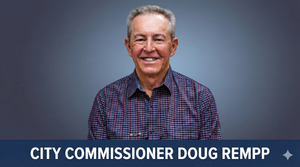
New Salina City Commissioner Doug Rempp says improving the city’s animal shelter and maintaining fiscal responsibility will be among his top priorities as he begins his term on the Salina City Commission.
In an exclusive interview with Salina311, Rempp discussed his transition into public office, the learning curve that comes with the role, and specific areas where he believes the city can improve services while remaining efficient with taxpayer dollars.
Rempp acknowledged that stepping into the role has come with a significant amount of preparation, including extensive commissioner meeting packets. “Having not been there before, there is an extreme amount of reading to prep you,” he said, noting that the volume of information was familiar after a lifetime in business where decision-making and daily correspondence were routine.
“One of the main things I ran on was fiscal responsibility,” Rempp said. While he credited the current commission for holding the mill levy steady, he said property taxes remain a concern locally and statewide. “I think government has a way of growing regardless of technology or advancements,” he said, adding that he intends to look for opportunities to reduce costs and improve efficiency.
Rempp said those efficiencies can come from both large policy decisions and smaller operational changes. As an example, he questioned whether certain infrastructure elements, such as frequent roadway bike markings, could be replaced with more cost-effective alternatives. “They might be little things, but I bet you those little things add up to serious money,” he said.
A major focus for Rempp, however, is the Salina Animal Services facility. He described conditions at the shelter as less than ideal and said reducing the shelter population and improving outcomes for animals is a priority. “When I went to the shelter, I left with a tear in my eye,” Rempp said. “They just seem to be starved for attention.”
Rempp expressed concern about limited volunteer engagement at the shelter and said he has heard from residents who were willing to help but encountered barriers. He believes increasing community involvement could improve animal welfare while reducing strain on staff.
He also said the city needs to explore broader solutions, including partnerships with private organizations. “It’s been my experience that a private entity is going to run it more efficiently than what the government does,” Rempp said, adding that privatization or operational restructuring should remain part of the discussion.
Rempp said he is also interested in creative, community-based approaches to animal adoption, including encouraging businesses or offices to adopt shelter animals. He believes this could both reduce shelter crowding and strengthen community connections. “Trying to get businesses or perhaps an office to adopt a pet,” he said, could be part of a broader strategy.
Looking ahead, Rempp said his approach on the commission will be shaped by both his business background and continued involvement in the Salina community. While acknowledging the learning curve of public service, he said the role keeps him engaged. “I like that part of it because it’s a good thing to keep your mind and brain active,” Rempp said.
Rempp emphasized that his goal is not to disrupt for the sake of disruption, but to ask questions, examine long-standing practices, and look for ways to improve outcomes for residents. “I’d like to look for every opportunity I can for saving the taxpayers’ money,” he said, while ensuring the city continues to care for vulnerable populations, including animals.
As he begins his term, Rempp said he plans to stay accessible to the public and engaged with local media, including Salina311, as discussions continue around fiscal policy, animal welfare, and the future direction of the city.