Salina, KS — The Salina City Commission on Monday authorized the city manager to amend the contract with DIEHL Enterprises, Inc. to continue debris and log-jam removal from the Smoky Hill River at Bill Burke Park, approving an amendment not to exceed $1,212,169.75. The vote follows months of emergency work, repeated high-flow storm events, and evolving cost estimates presented to the commission by Martha Tasker, Director of Utilities.
What happened and why the work is required
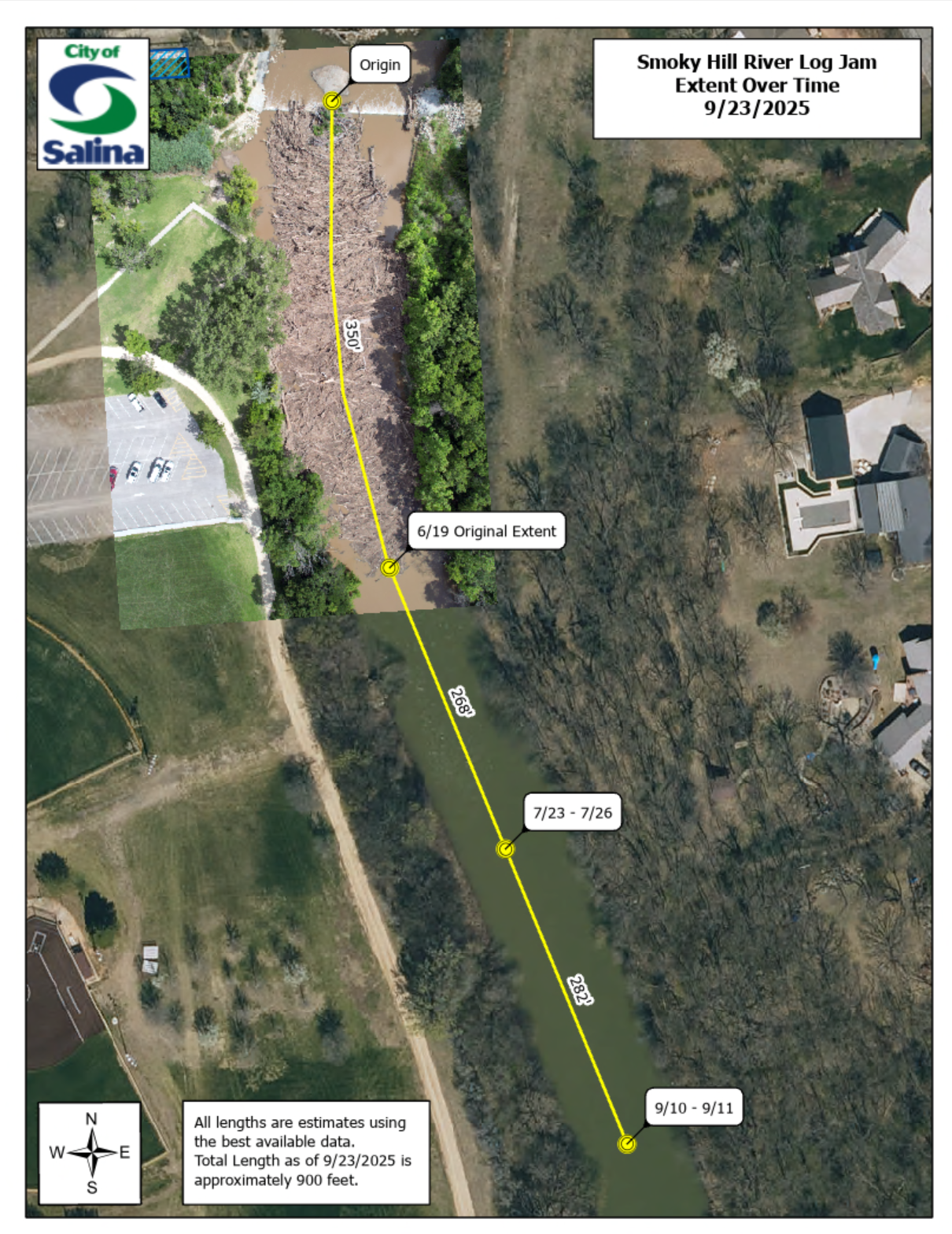
City staff told the commission that four separate high-flow storm events this summer pushed large volumes of logs and woody debris into the Smoky Hill River near the city’s scour key and the municipal surface-water intake. Tasker said the river’s normal base flow in that reach is roughly 40–50 cubic feet per second (cfs); the storm events produced flows “in the thousands,” and staff described the situation as unprecedented for the area. The log jam expanded after each event, at one point measuring roughly 900 linear feet of compacted debris, with about 350 feet originally targeted in the contract and an additional approximately 550 feet added by later storms.
Staff and the contractor found that many logs became embedded in mud and did not float downstream during high flows, which required onsite excavation access rather than relying on river currents to bring the debris to a single removal point.
Original contract and what’s been done so far
- The City originally awarded the project to DIEHL Enterprises with a contract of roughly $411,231 to remove the log jam as it existed at the time bids were solicited. That contract included a 10% contingency in initial planning.
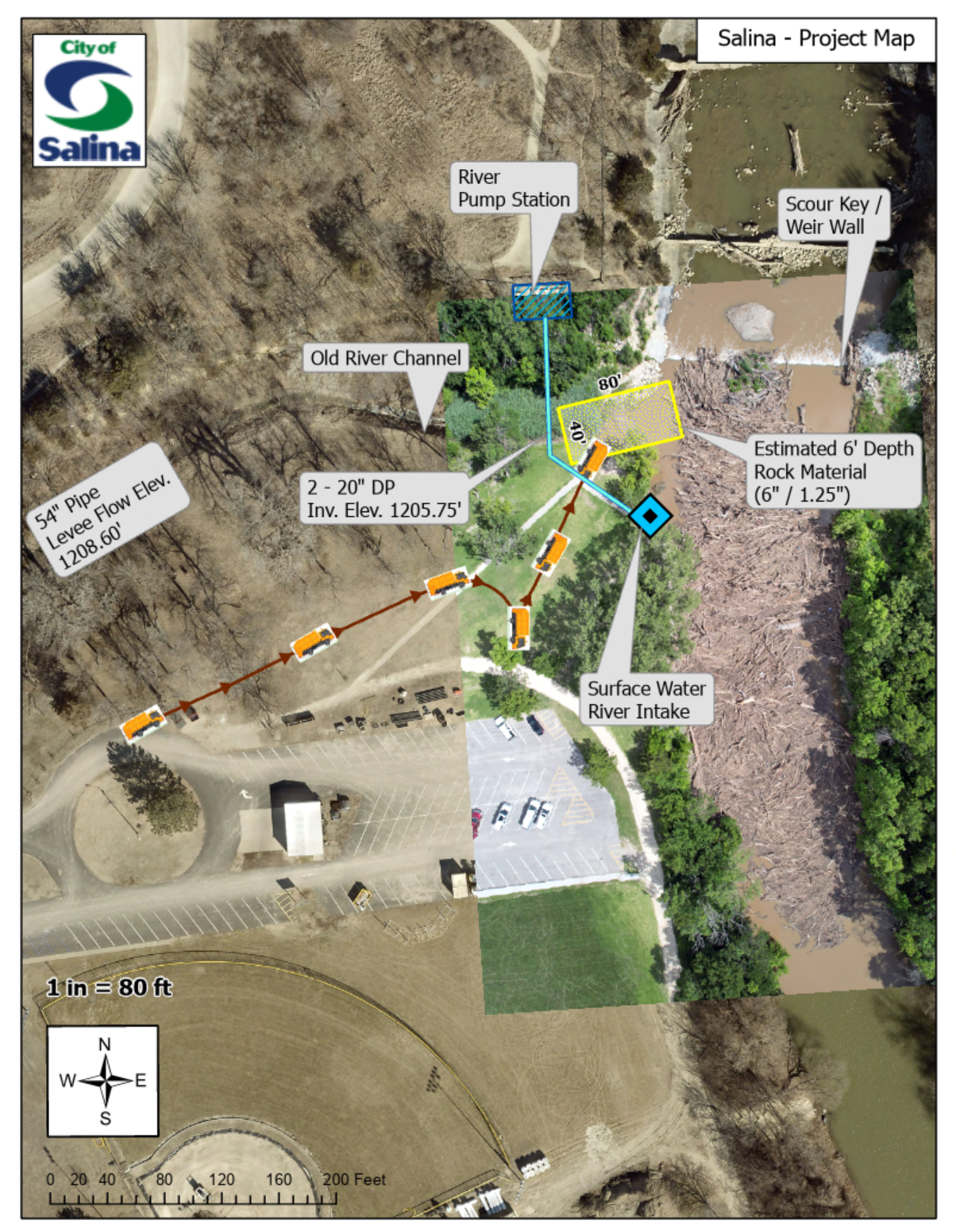
- Work to date has included construction of a temporary rock equipment pad near the scour key and a temporary log-access road to reach compacted debris. Tasker said the contractor has already hauled approximately 220 truckloads of debris to the wastewater plant. DIEHL reported trucks leaving the site typically in the 60,000–70,000 lb range per load, and the contractor said loads were not approaching statutory overweight limits.
- One of the September storms washed out a large portion of the rock pad, requiring the pad to be rebuilt. Because the pad was washed out and the debris did not move as expected, the contractor had to construct the access road and perform additional work beyond the original scope.
Why the scope and cost increased
City staff explained that the original contract and the bidders’ pricing were based on the 350-foot jam that existed when the bid package was issued. After two additional storm events — including major July and September storms — the jam lengthened to roughly 900 feet and became more compacted and embedded. To reach and remove that additional material, DIEHL proposed building more access infrastructure and performing extra removal work along the extended length.
Tasker summarized the extra components and costs presented to the commission:
- Rebuilding the rock equipment pad: $35,086 (amount reported in staff materials)
- Constructing the temporary log-access road (about 250 linear feet in the initial additional work): roughly $49,446 (reported as approximately $247 per linear foot for that segment)
- Other invoiced and forecasted labor, equipment and material costs beyond the original contract were included in staff calculations that led to the total amendment request.
City staff and the contractor also provided a detailed cost-per-linear-foot analysis. That analysis accounted for base removal costs and additional expense factors such as insurance, extra equipment and increased wear and fuel consumption tied to extended access needs. The figures discussed in the meeting led staff to present two illustrative scenarios for the added 550 feet of debris: one estimate that included a rock cap/stabilization method and one that did not. Staff used the higher scenario in the fiscal calculation presented to the commission.
Total amendment and project price
After factoring in the original contract, the pad rebuild, the access road and the additional removal work for the longer jam, city staff recommended amending the DIEHL contract to a not-to-exceed amount of $1,212,169.75. That figure was the maximum amendment amount presented for commission approval; staff said actual final costs could be lower if the work is completed sooner or if fewer resources are required than anticipated.
Tasker described the proposed amendment as a guaranteed maximum price that could come down if work finishes quickly and if fewer resources are ultimately required.
Disaster assistance and expected reimbursement
City staff reported interactions with Kansas emergency management and the federal disaster process: two of the storm events (July events and the September event) have been reviewed by state/federal teams and were included in a Preliminary Damage Assessment. The disaster assessment submitted to the commission put estimated eligible damages at roughly $714,330.17 for the July and September events combined. Under the typical federal cost-share formula cited by staff, FEMA would cover 75%, the State of Kansas 10%, and the City 15% of eligible costs. Staff told the commission the city could therefore expect significant federal and state reimbursement, and Tasker estimated an approximate disaster payment of around $607,000 based on the figures provided by the disaster team and standard cost-share ratios. Staff cautioned those numbers were preliminary and conservative, and that final reimbursement will depend on the state and federal review of invoices and supporting documentation.
Separately, Tasker and staff flagged potential additional FEMA-eligible work: intake structure repairs and bank stabilization that may be required if the intake was damaged. Staff and an outside reviewer each produced independent estimates that placed intake repair needs in the vicinity of $1 million, but Tasker cautioned that such costs remain uncertain and would be subject to review in the disaster reimbursement process.
Why other options were not chosen
During the meeting staff addressed alternate strategies that had been considered or suggested publicly: burning the debris, using explosives, or allowing nature to take its course. Tasker and a representative of the Army Corps of Engineers said burning and explosives were not feasible or effective for this wet, embedded material and could create other hazards. Staff said leaving the jam in place was not acceptable because it interfered with the city’s water intake, created downstream debris risks and could threaten infrastructure such as bridges.
Commissioners and staff also discussed whether to rebid the remaining work. Tasker said she had run independent cost calculations and, because DIEHL was already on site with equipment and crews, staff recommended continuing the current contract and leveraging the work already performed rather than rebidding, which staff believed could increase time and costs and reduce efficiency.
Contractor comments
Stanton Diehl of DIEHL Enterprises addressed the commission and said the contractor’s approach — constructing a rock pad and access road for excavation — was working despite difficult conditions. He noted the crews had refined their methods on site and that trucks leaving the site typically did not weigh near the legal maximum. Diehl said the company planned to weigh loads periodically to document material removed.
Public comment and stakeholder concerns
Several members of the public addressed the commission during the meeting. Comments included:
- Questions about preventative maintenance upstream and whether the city had been successful in preventing debris buildup earlier.
- A suggestion that re-bidding might save money. Some members of the public cautioned that rebidding could slow progress and reduce efficiency because the current contractor had developed site familiarity.
- Concern from residents about debris moving downstream; Tasker said she had received at least one call about debris observed downstream and had communicated with the U.S. Army Corps of Engineers to confirm permits and to share photos.
- A local commenter described an alternate removal method (crane extraction and on-site burning) that had been proposed by another contractor in the initial bidding process; staff and the Corps explained why that was not chosen for this site and these conditions.
Environmental permitting and oversight
Tasker told the commission she had been in touch with the U.S. Army Corps of Engineers to ensure the city’s permit remained valid for the remediation approach being used. Corps staff had asked questions and been kept informed; Tasker said the city coordinated permit compliance and provided photos and updates as requested.
City finances and contingency
Commissioners asked about where the amendment funds would come from. City staff said the work would be covered by General Fund reserves and that the city’s general reserve fund balance was projected to finish the year in the $27–$28 million range after the amendment, down from a starting balance of about $34 million earlier in the year. Staff emphasized that having reserves available is the reason the city can respond quickly to this kind of emergency.
Next steps and timeline
- Staff recommended the commission authorize the amendment so work can continue without interruption. The commission approved the motion to authorize the city manager to amend the contract with DIEHL Enterprises for debris removal at Bill Burke Park in an amount not to exceed $1,212,169.75.
- Tasker told the commission the contractor projected a completion window that could be as soon as late November if conditions allowed, but that weather and river flows would determine the actual schedule. Staff said they would continue to document labor, equipment and truckloads to support FEMA reimbursement applications.
- City staff committed to returning to the commission with updates and to monitor invoices and project progress.
What this means for residents
- The city will continue active debris removal operations at the Smoky Hill River near Bill Burke Park. The work is intended to protect the city’s surface-water intake, reduce downstream debris risks and restore normal river flow in the affected reach.
- The city seeks federal and state disaster reimbursement for a substantial portion of eligible costs; preliminary estimates and staff comments suggest the city could receive significant reimbursement, but final amounts are not yet guaranteed.
- Residents with concerns about debris moving downstream or potential impacts to private property were encouraged to report observations to city staff; the city is coordinating with the Army Corps and other regional partners.
Sources: Presentation and staff report by Martha Tasker, Director of Utilities; City Commission meeting public record, October 13, 2025; statements from DIEHL Enterprises at the meeting; public comments recorded at the meeting.